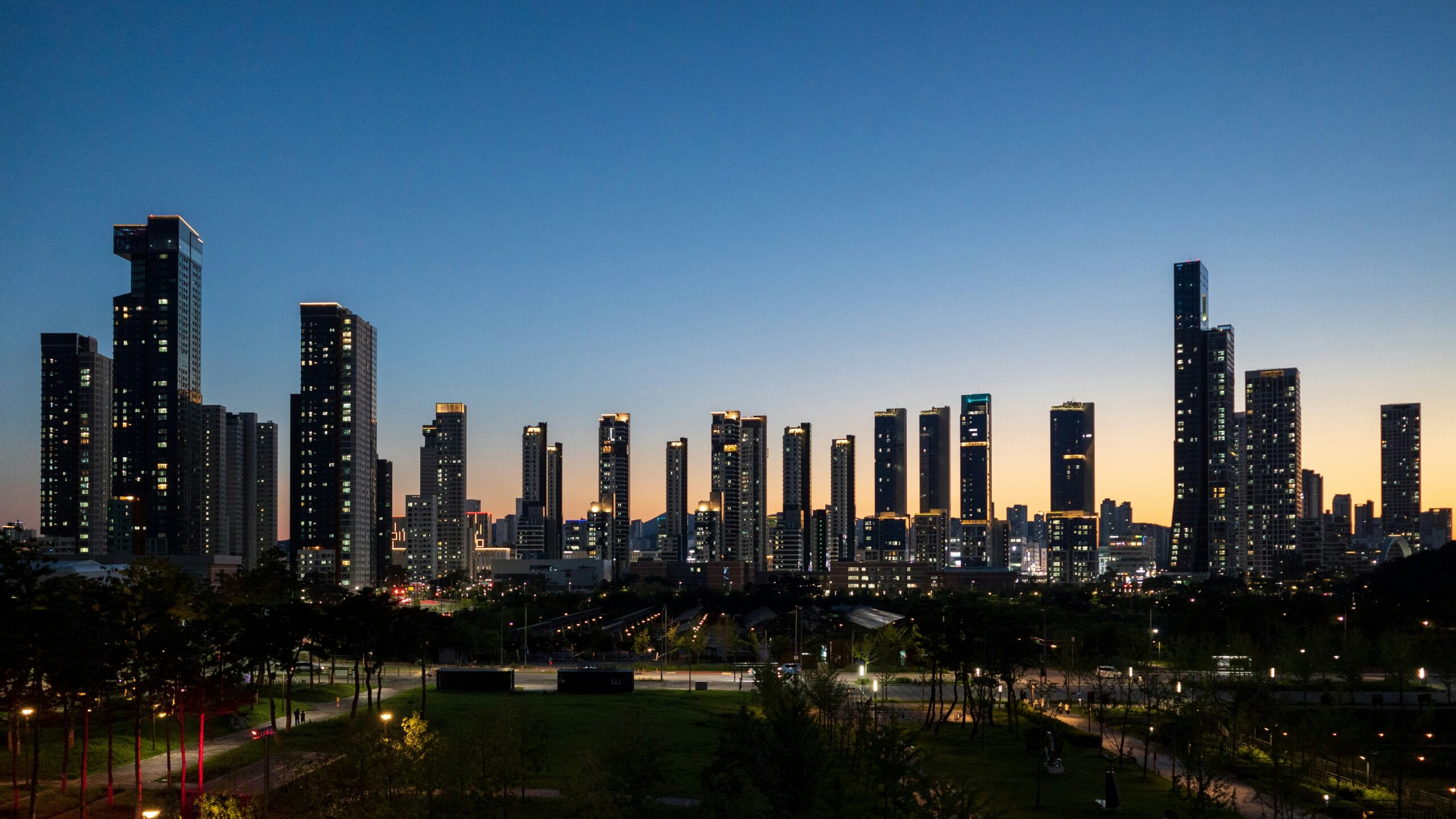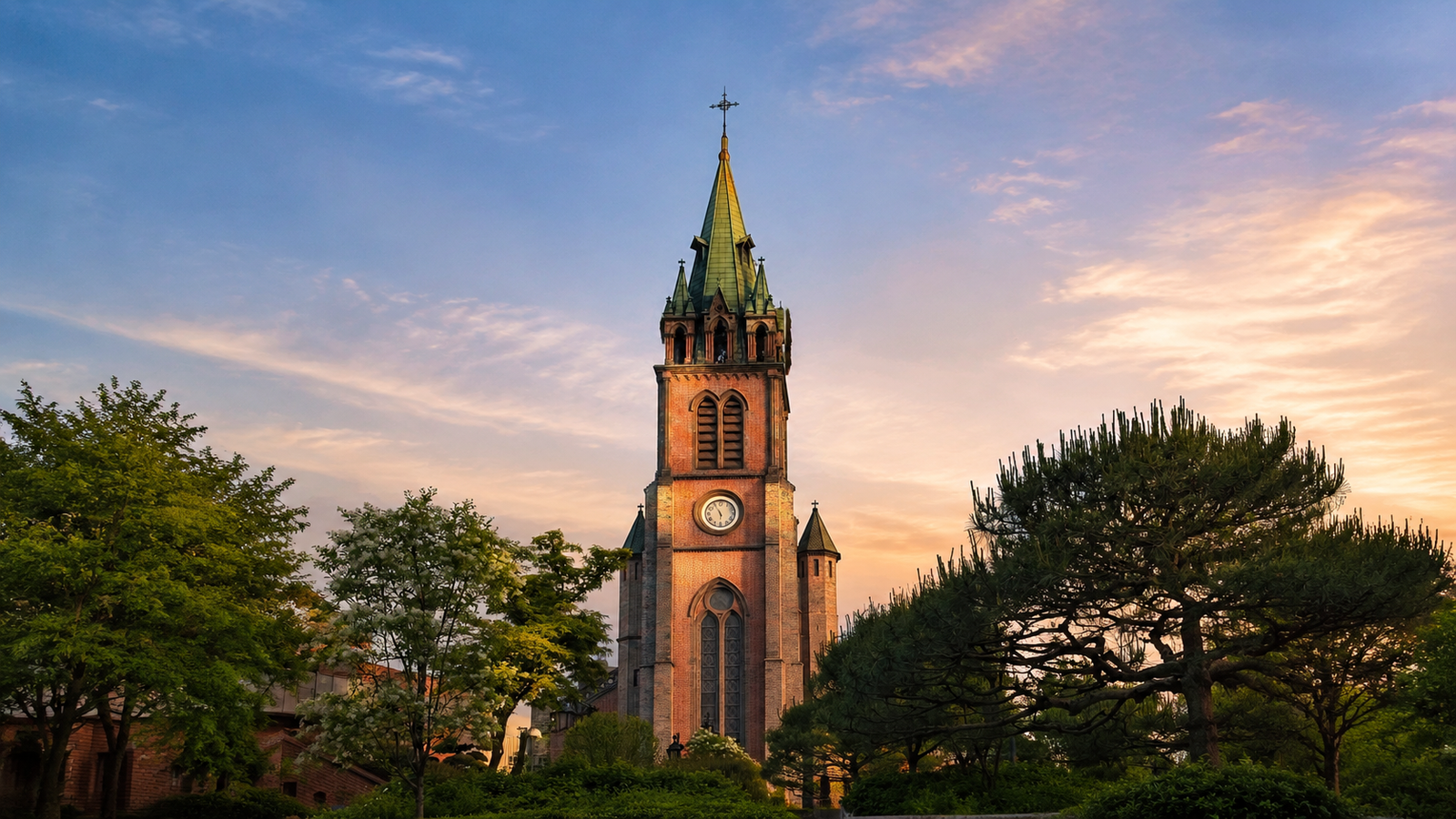
Religion in South Korea is changing in ways that are easy to miss if you only look at church crosses and temple roofs. Walk around almost any Korean city after dark and you’ll see it on the edge of town and there’s usually a temple roof too, curved and quiet, incense drifting out the door. It’s a strange kind of coexistence between two very different faiths, each fully visible, each seemingly unbothered by the other, sharing the same skyline without much fuss. On the surface, Korea looks like one of the most religious places in Asia. Underneath that surface, something much more complicated is going on.
Gallup Korea has been asking the same questions about religion here since 1983, which means their newest survey conducted in 2025, published in 2026 isn’t just a snapshot. It’s a 40-year story. And it’s a stranger story than “Korea is losing its religion.” What’s actually happening is closer to a split: fewer and fewer people are involved overall, while the ones who stay seem to be holding on tighter than ever.
Religion in South Korea: A 40-Year Shift
In 1983, 44% of Korean adults said they followed a religion. That number kept climbing for two more decades, peaking at 54% in 2004 a stretch of years that lines up closely with some of Korea’s fastest decades of modern growth, when new apartment blocks, new highways, and, it turns out, new congregations were all rising together. If you’d stopped the survey there, you’d have concluded Korea was getting more religious with time, not less.
Then it reversed. By 2014, religious affiliation had slipped to 49%. By 2022, deep in the pandemic years, it had dropped to 37%, one of the lowest points on record. The most recent numbers, from 2025, show a small bounce to 40%. Worth noting this isn’t a straight slide off a cliff. But even with that little recovery, today’s 40% is still 14 points below the 2004 peak.
The part that struck me most: it’s the young people who never showed up
This isn’t really a story about people losing their faith one by one. It’s a story about an entire generation never picking it up in the first place.
Look at Koreans in their 20s. In 2004, about 45% identified as religious nearly half. By 2014, that had dropped to 33%. By 2022, just 19%. That’s not older believers quietly drifting away. That’s a whole generation not walking through the church doors or temple gates that their parents did. It leaves every religious community here quietly facing the same math problem: if people in their 20s aren’t showing up now, who fills the pews and prayer halls in twenty years?
Korea’s religious map in 2025
Today, 60% of Korean adults say they have no religion at all. Of the remaining 40%: 18% are Protestant, 16% are Buddhist, and 6% are Catholic. That 60% is worth sitting with for a second, because it’s almost the reverse of how Korea gets pictured from the outside a place of towering megachurches and mist-covered mountain temples, devout at every turn. Numerically, most people here simply aren’t religious at all.
One detail worth sitting with Buddhism’s membership skews noticeably older than the other two groups. Protestant and Catholic communities are much more evenly spread across age groups. That’s not just trivia. It’s a real question mark over what Korean Buddhism looks like a generation from now, if it isn’t drawing younger members at the same pace.
Religion’s reputation has taken a real hit
It’s not just personal belief shrinking it’s how much influence Koreans think religion has on the country as a whole. In 1983, 68% believed religion’s social influence was growing. By 2025, only 24% still think so a 44-point collapse across four decades. The churches and temples haven’t gone anywhere, some of the buildings have only gotten bigger. Fewer people just see them as shaping where the country is actually headed.
Whether religion is actually good for society tells a similar, bumpier story. In 2014, 63% of Koreans said religion helped society. That number cratered to 38% in 2021, then recovered to 48% by 2025, still short of a majority, and still below the 2014 level. The split by group is stark: 80% of Protestants, 70% of Catholics, and 61% of Buddhists think religion helps society, versus just 32% of people with no religion at all. That’s not really a disagreement. It’s two groups looking at the same institutions and seeing entirely different things.
But for the ones who still believe? It matters more than ever
None of this decline means religion has gotten less important to the people still in it. Ask Protestants in 2025 whether religion matters personally, and 91% say yes. For Catholics, it’s 82%. For Buddhists, 68%. Protestants in particular reported strong belief in the classic pillars of faith God, heaven, an afterlife, miracles.
This isn’t really a country losing its religion in any simple sense. It’s a country splitting in two: one half drifting further away, not angry, just quietly uninterested and a smaller half holding on tighter than it used to. Look only at the first half and you’d write a story about a secular Korea. Look only at the second and you’d write a story about a deeply devout one. Both stories are true. They’re just happening to different people, at the same time.
What this means if you’re living here
The future of religion in South Korea may depend less on competition between churches and temples, and more on whether younger Koreans see religion as relevant at all. If you’re a foreigner in Korea, the landscape you already know isn’t going anywhere the crosses will keep lighting up at night, the temple bells will keep ringing on quiet mornings, and somewhere nearby a grandmother will still be bowing at a neighborhood shrine. But underneath that familiar surface, Korea’s religious institutions aren’t really competing with each other for followers anymore. Increasingly, they’re competing with something quieter and much harder to beat: a generation that isn’t asking the question at all.